AI Strategy & Fractional CTO
We select use cases, write the roadmap and ROI model, then provide senior AI leadership on a retainer while you hire. See Fractional AI CTO.
AI strategyWe do AI strategy and fractional AI CTO work, LLM apps and agents, AI knowledge bases and vector search, AI security, Salesforce, event technology and AI SEO. Our teams are small and senior, and we fix the scope wherever the work allows it.
Every engagement starts with a decision about what is worth building. Then we build it and keep it running, with security work inside the build. Pick the service closest to your problem.
We select use cases, write the roadmap and ROI model, then provide senior AI leadership on a retainer while you hire. See Fractional AI CTO.
AI strategyLLM applications, agents and automation, and MCP servers that connect models to your systems safely.
LLM app developmentRetrieval-augmented knowledge bases that answer from your documents, plus vector and hybrid search on pgvector, Milvus or a managed store.
AI knowledge baseWe run LLM security audits, prompt-injection defence and red teaming, and set up governance that maps to the EU AI Act and ISO 42001.
AI securityWe implement Salesforce, write Apex and LWC, build integrations and run managed services, with Agentforce and Einstein where AI inside the CRM pays off.
Salesforce servicesWe build event apps, registration and ticketing, check-in and badge printing, lead retrieval and AI matchmaking on our own Eventify platform.
Event technologyWe do technical SEO, structured data and generative engine optimisation so that people and AI assistants find you, plus marketing automation that turns visits into enquiries.
AI SEO & marketingWe have shipped 1500+ apps since 2006. We still build native iOS and Android, web, APIs and IoT, now with AI designed in from the first sprint.
Custom softwareThe shape is the same for a two-week assessment and a year-long build. Each step has a written output you keep, whatever you decide next.
We review your systems, data, risks and candidate use cases and rank them by value and feasibility. You get a roadmap you can act on.
We build a thin working slice on real data with an evaluation set, so the go or no-go decision rests on numbers rather than a demo.
We engineer the system for production, covering retrieval, agents, integrations and UI, with evals wired into the pipeline from the first sprint.
We write the threat model, defend against prompt injection, run red teaming and prepare the governance paperwork your auditors will ask for.
We monitor the system, control cost, update models and give you a named engineer who knows it. You choose between hand-over and a managed service.
Read how we work in more detail in How we work and Engagement models.
These are packaged starting points we have built before. Each one comes with a reference architecture, an evaluation plan and a realistic timeline.
Deflect routine tickets, assist agents on the hard ones and escalate cleanly, grounded in your help centre and policies.
Explore OperationsExtract, classify and validate invoices, forms and contracts in volume, with humans reviewing only the uncertain cases.
Explore SalesMeeting prep, call notes and next steps written into the CRM, so reps sell and the pipeline stays honest.
Explore KnowledgeRetrieval-augmented answers with citations for your support team, built on the documentation you already maintain.
Explore EventsAttendee-to-attendee and attendee-to-exhibitor recommendations that make networking the reason people come back.
Explore SalesforceAI inside the CRM you already run: agents for service and sales, grounded in Salesforce data with the right guardrails.
ExploreMost AI projects do not fail loudly. They stall after a promising demo because nobody set up the evals, the security review or the owner. We put those on the critical path from day one.
The people on the call are the people who build. There is no hand-off to a junior bench after the sales cycle.
Threat modelling, prompt-injection defence and red teaming happen inside the build rather than in a separate audit at the end.
Every system ships with an evaluation set and a dashboard, so you know when quality moves and why.
We work across Claude, GPT, Gemini and open-weight models, and deploy self-hosted or private systems when the data demands it.
We were founded in 2006 and have shipped 1500+ apps for 450+ clients. We know what production means: releases, support and upgrades.
Regulation, data sensitivity and the shape of the work differ by sector. These pages show what we would build first, and what we would refuse to automate.
These four tools run in your browser and send nothing to us. Each one shows its working.
Ten minutes gives you a score out of 100 and the three things to fix first.
Start FreeEstimate monthly spend by model, token volume and caching strategy.
Calculate FreeSize a knowledge base: embeddings, storage, retrieval and generation costs.
Estimate FreeA 30-point self-audit for any LLM application before it goes live.
Run the checklistHow retrieval-augmented generation answers from your data, where it breaks, and how to evaluate it.
Read PlaybookThe first 90 days: what to assess, what to stop, what to prove and how to report it to the board.
Read ChecklistThe controls every LLM application needs before launch, mapped to the OWASP LLM Top 10.
ReadEventify and ZekoHR are built, hosted and supported by the same engineers you would work with. These studies show how they are put together, which AI decisions held up, and what we would do differently.
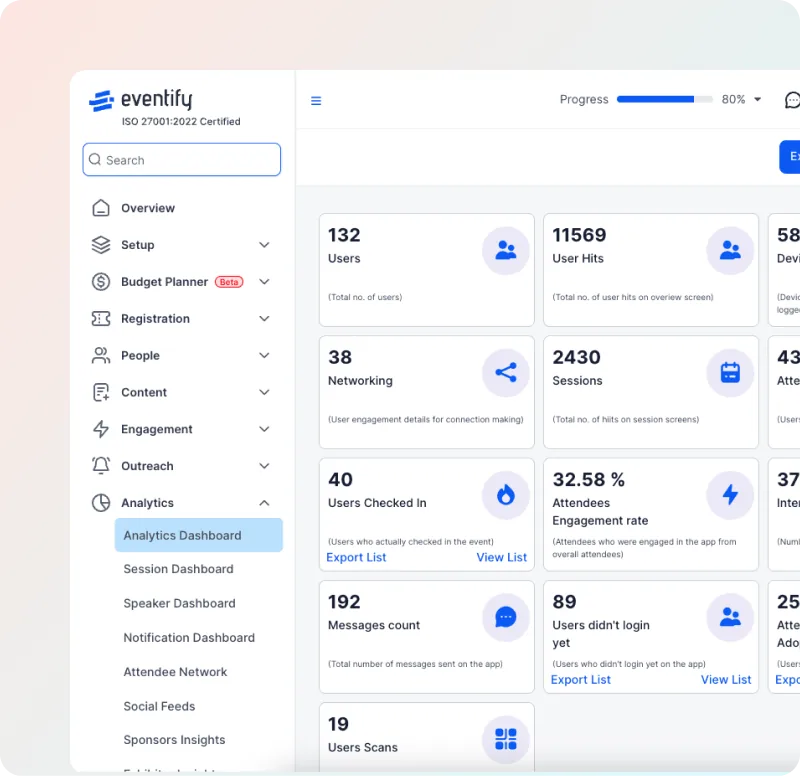
Native apps, organiser admin and a tenant-scoped API that lets one backend serve many branded events without leaks.
Read the study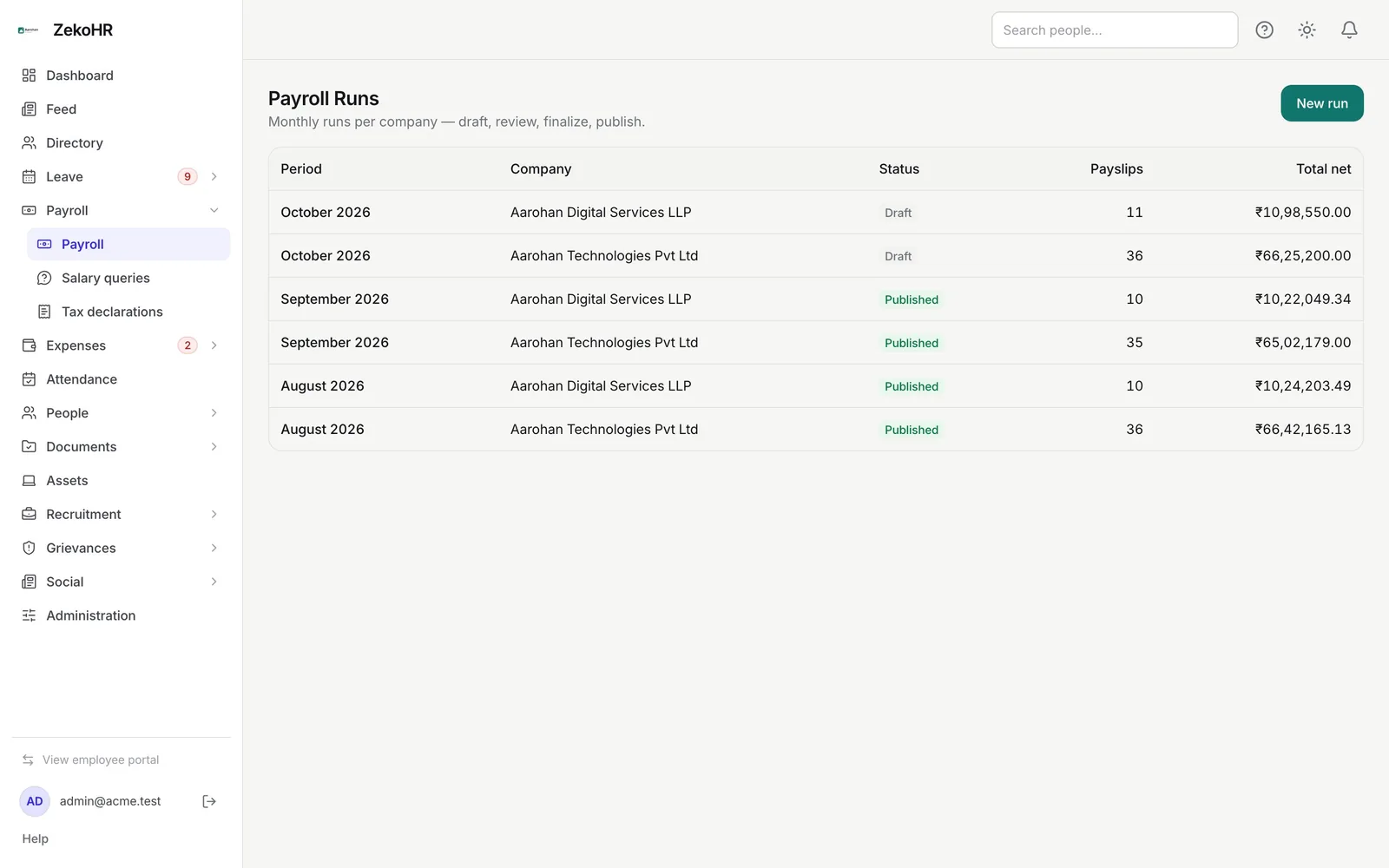
Payroll, attendance, recruitment, documents, expenses and grievances, with isolation enforced in one place.
Read the study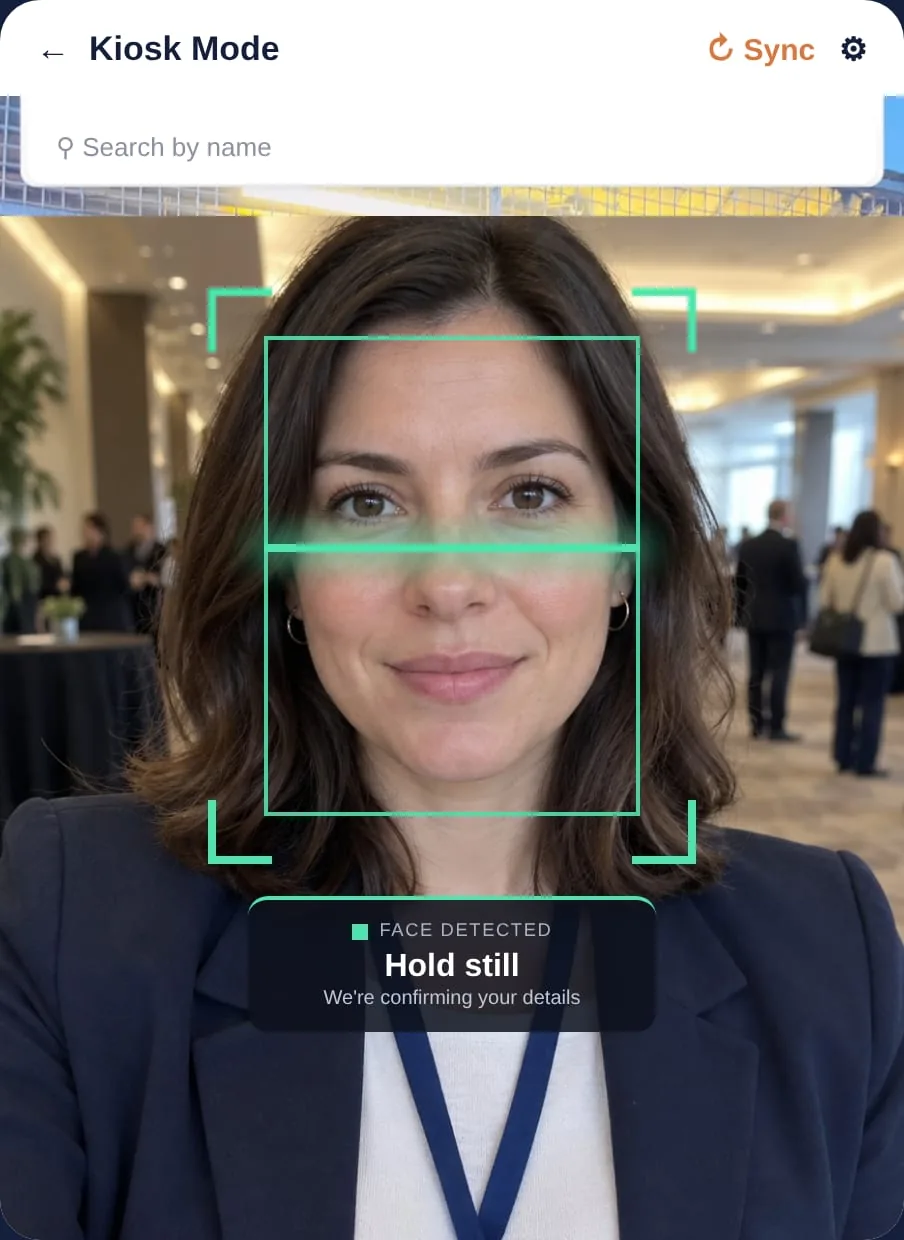
A local-first desktop app that keeps printing and checking people in when the venue Wi-Fi gives up.
Read the studyEvery Eventify feature went through a short written spec before code, was built in two-week sprints and was tested at a live event before we called it done. We run client work the same way.
You get a short call with a senior engineer rather than a sales queue. You leave with a straight answer: what is worth building, what it would take and what we would do first.